
Who wouldn’t want to destroy all evil and live in a peaceful world? But what exactly is “evil” and how can it be destroyed? elucidating the topic,giving an uncommon perspective to a common problem.
Evil is neither a quality nor is it an act, it is a consequence of ignorance. This has been expressed in so many ways. You have surely heard the statement, “They know not what they do.” Where there is ignorance, evil – whether it gets recognized as such or not – is a natural play.

Evil never leaves. It cannot leave because it is not a quality or an act, it is a certain absence of knowing. If something is present, we could destroy it but absence cannot leave – you cannot destroy darkness, you just have to bring light. Similarly, you cannot destroy evil, you just have to bring knowing and awareness. Evil changes form, complexion and direction but fortunately, ignorance has only one form, so it is easy to deal with. To deal with ignorance we must know the existence.
To know the existence, first we must see that your mind and your body are a product of the world and its people. Train your brain to form new neuron pathways, new thought patterns, essentially a new brain”. Your original nature is not in your experience because it is on the other side of the mind. In a way, your mind is like a mirror. It may be a distorted one, but still a mirror. You are bounded by the conditioning of your limited information, You see the world because it is reflected in your mind. I am talking about your physical or psychological self. Being in the control of human neurotic, we divulge our thoughts and emotions and let go the control, Pain is inevitable, suffering is your option.

The progression is essentially as follows regardless of which side of the fence an issue originates, imbalances in thinking can create imbalances : Pain leads to negative thoughts/self-talk/beliefs lead to feelings of lead to suffering leads to muscle tension and stress lead to more pain leads to increased negative thoughts lead to increased frustration leads to greater suffering, and so on.The longer such a cycle continues, the more out of balance a person becomes. Suffering can be modified when people become consciously aware of this chain reaction and learn how to respond differently to their pain. The process of pain recovery includes dramatically changing the negative progression starting with regaining cognitive and emotional balance through the application of acceptance strategies and mindfulness-based practices. Reestablishing balance counteracts the above deviation-amplifying dynamics: conscious awareness of negative thinking/self-talk and how it sets off the cascade of events that fuels suffering leads to mindful.
“Between stimulus and response there is a space. In that space is our power to choose our response. In our response lies our growth and our freedom.” —Viktor Frankl
In his book Man’s Search for Meaning, Dr. Frankl wrote about the psychological impact of life as a prisoner in the Nazi concentration camps of World War II. His mother, father, brother, and pregnant wife were all killed in the camps. Dr. Frankl describes in chilling detail how his captors took from him virtually everything of personal value and basic human dignity.
The only thing that the Nazis were unable to take away was his choice as to how to respond to the deprivation, degradation, and trauma to which he was subjected. He made a conscious decision to focus his energies on “owning” that small but all-important space between the stimulus (whatever was said or done to him) and his response to it. His ability to retain that degree of psycho-spiritual autonomy in the most horrific circumstances imaginable provides a remarkable example of interpersonal strength, grace under extreme duress, the power of personal choice, and the Serenity Prayer in action.
Physical pain has distinct biological and psychological components that effectively represent stimulus and response. The biology of pain is the signal transmitted through the central nervous system that “something is wrong.” The psychology of pain is the interpretation or meaning we give to that pain signal—the internal self-talk and beliefs about it which then drive our emotional reactions. Suffering results from mental and emotional responses to pain. The biological and psychological facets of chronic pain combine to become like a smoke detector that goes on and stays on, continuously sounding a harrowing alarm at high volume.
Pain is unavoidable; suffering is not. It occurs in response to thoughts such as: “Why me?!” “It isn’t fair!” “This is horrible!” “I can’t stand it!”
“To see a world in a grain of sand
And a heaven in a wild flower
Hold infinity in the palm of your hand
And eternity in an hour”
– Auguries of Innocence (William Blake)
I finally understood why William Blake’s poem was entitled Auguries of Innocence. Innocence is the original nature of creation before it was distorted through the eyes of men. It is the freedom from judgement and conceptual reality. To see through the eyes of God is to look with innocence into the unalloyed essence of creation.
There is a superficial level of perceiving the world through the mind by way of conceptual understanding. Concepts, framed by words, serve to dichotomise a world that was created in unity. By using the concept of ‘I‘ and ‘you’, we naturally draw boundaries between each other and define ourselves as separate entities. These concepts are created by the mind which holds on to the illusion of control and knowing. In truth, the mind is incapable of comprehending the deeper nature of reality beyond mere concepts. By perceiving the world through concepts, we remain trapped in the illusion of Maya which conceals the deeper spiritual truths. Concepts do serve a purpose if applied in the right way, for they help us to define what we are not. Self-realisation is then a process of unlearning these concepts.
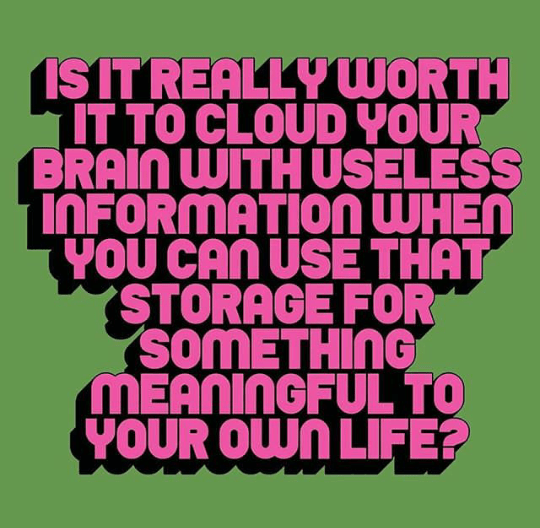
Beyond concepts, the truth can only be perceived if we first give up our superficial knowledge of the world and acknowledge that we know nothing about the absolute nature of reality. We then delve into the unknown that exists beyond the comprehension of the mind. The unknown is intimidating to the mind which clings on to the illusion of knowing, yet emancipating for the soul. Beyond the mind, there is a deeper level of knowing that transcends language and concepts. This can be felt and experienced directly with the soul when the mind is silenced.
From that place beyond the judgmental mind, perhaps we can learn to perceive the world in its fullness again. As Jesus said, “Truly I tell you, unless you change and become like little children, you will never enter the kingdom of heaven.” (Matthew 18:3 NIV) Without the veil of judgement, perhaps we can directly experience what William Blake meant when he said “If the doors of perception were cleansed, everything will appear to man as it is: infinite.” We will begin to see God in everything if we learn to perceive the world with innocence again.

 Eyeofmystic